A Noisy Breaker Box: What It Means and What to Do
A switchboard should be silent, or close to it. Any hum, buzz or crackle you can hear from across the room is the board telling you something is wrong before it fails outright.
Some noise is harmless background. Some is the loudest warning you'll get before a real fault.
This page helps you tell them apart, then call (02) 9134 9029 if it's the second kind.
Why Your Switchboard Is Making That Noise
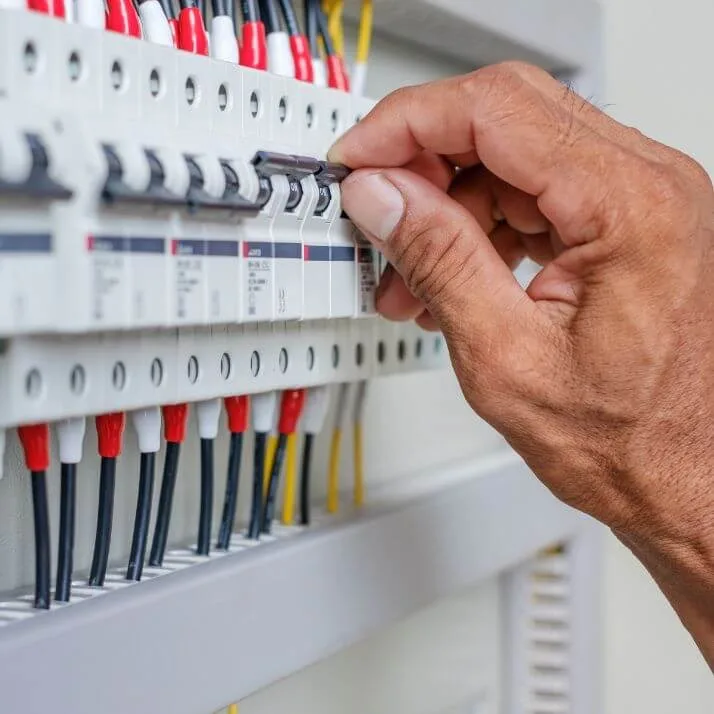
Electrical noise almost always comes from a gap. Current jumping a small gap it shouldn't, whether at a loose terminal, a failing breaker or a degraded connection, vibrates and heats the air around it.
That vibration and heat is what you're hearing as a hum, buzz or crackle.
A steady, low hum can be a transformer or meter doing its normal job. A noise that changes, gets louder under load, or has any crackle to it means current is arcing somewhere it isn't meant to.
Common Causes of a Noisy Breaker Box
Most noisy switchboards trace back to one of these:
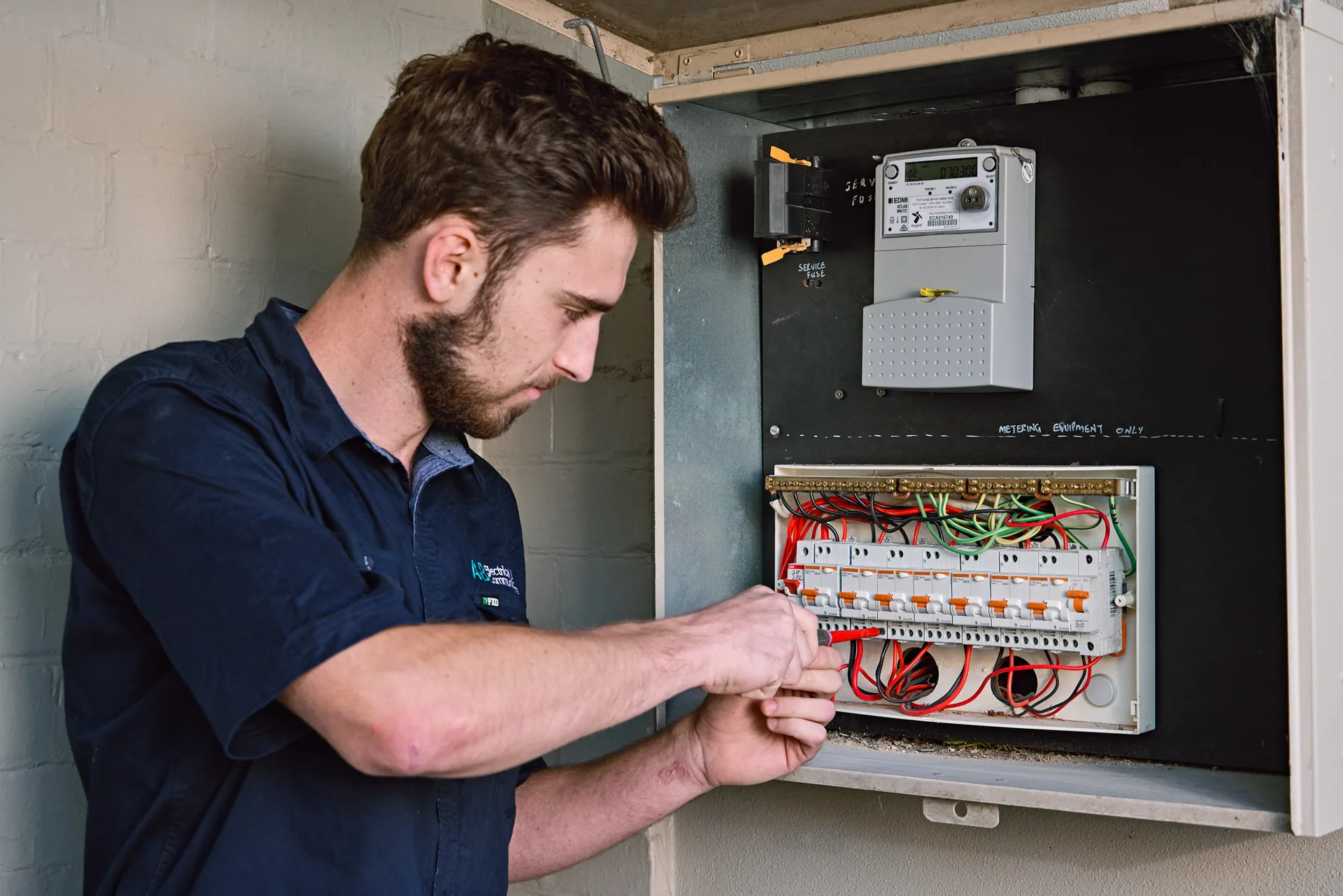
- A loose terminal connection. Vibrates and arcs slightly under load, getting louder over time.
- An overloaded circuit or breaker. Strains under more current than it's rated for.
- Ageing ceramic fuses. Run hot and loose compared to modern circuit breakers.
- A failing breaker mechanism. The internal contacts wear and stop making clean contact.
- Moisture or corrosion inside the board. More common on older, less-sealed switchboard enclosures.
- A meter or transformer hum. Usually harmless, but worth ruling out rather than assuming.
When a Switchboard Noise Is Urgent
Some sounds mean call now. Others can sit until a routine visit.
Ring us straight away if you hear crackling, popping, or buzzing that comes with any burning smell or visible discolouration around the board.
A hum that's getting louder week to week, or one that only appears when a specific appliance runs, is worth booking soon rather than urgently.
A faint, steady hum that never changes and brings no smell or heat is the lowest-priority version and can wait for a scheduled visit.
Do This First
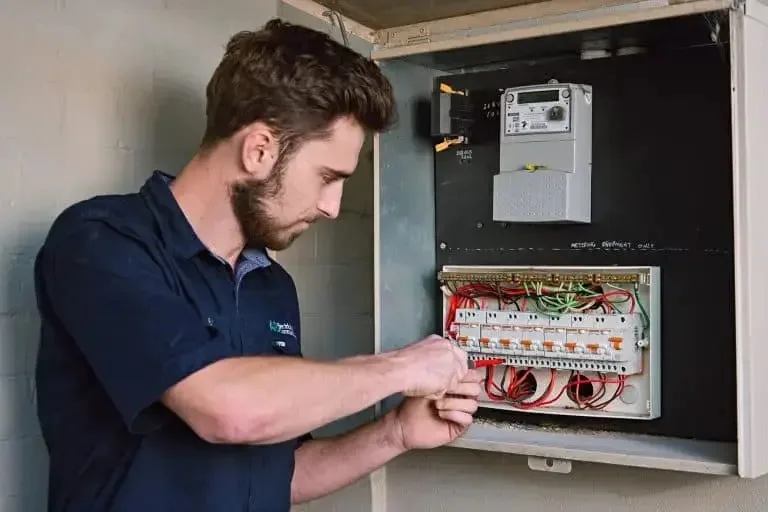
- Don't open the switchboard cover. Parts inside stay live regardless of the main switch position.
- Note when the noise happens. Constant, intermittent or only under certain loads all point to different causes.
- Check for smell or heat nearby. Any warmth or burning smell upgrades this from a booking to an urgent call.
- Call (02) 9134 9029 and describe what you're hearing so we can prioritise correctly.
How We Fix It, Step by Step
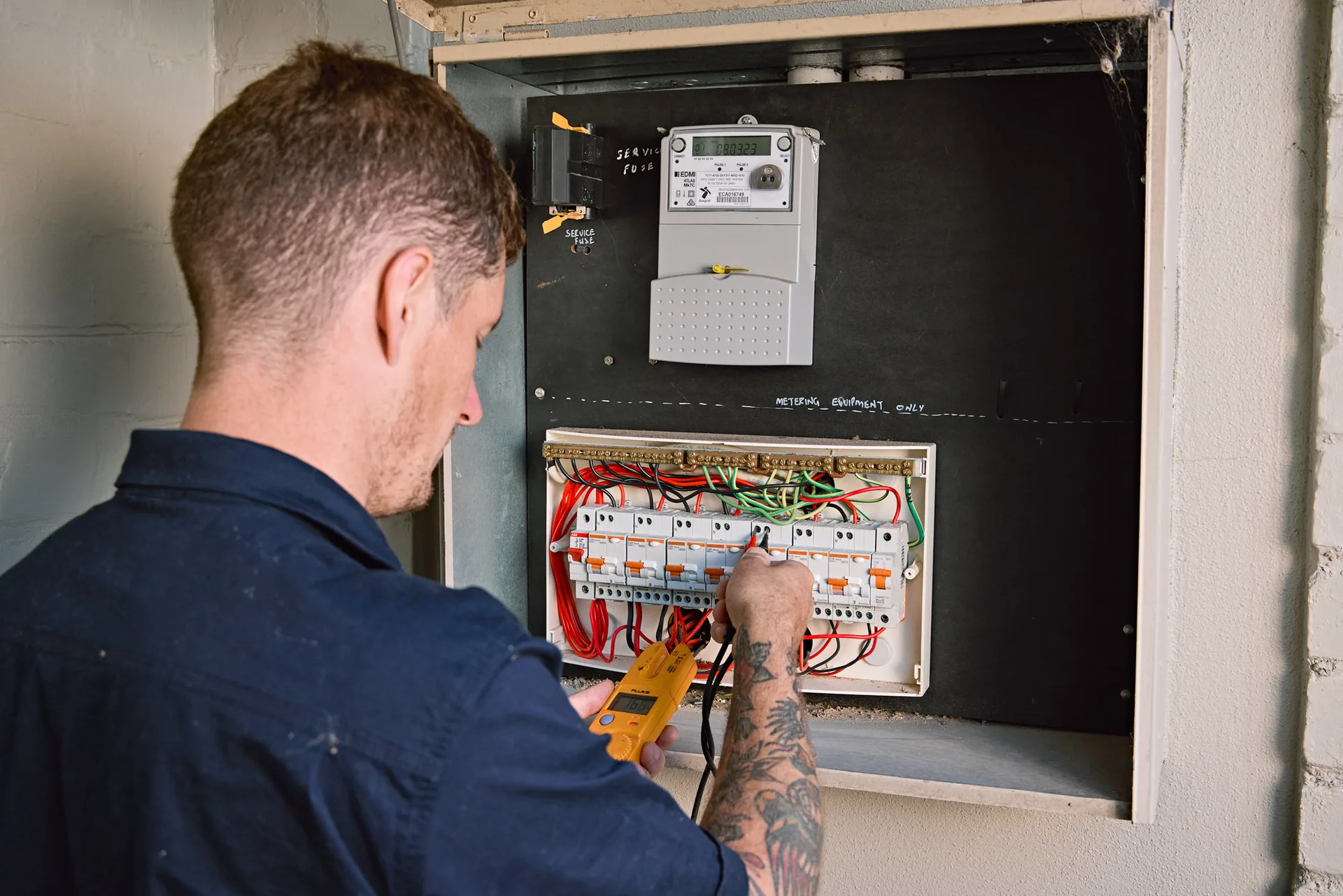
We test the board under load with thermal imaging first, which shows us exactly which terminal, breaker or connection is running hot before we touch anything.
With the source pinned down, we shut off that circuit and repair or replace whatever failed, be it a loose terminal, a worn breaker, or in older homes the ceramic fuses themselves.
On a board still carrying original fuses, this is usually where a full switchboard upgrade beats patching one fault at a time. Either way, we lay out the options plainly.
Notifiable work is tested and certified before we pack up.
The Reactive Clay Factor
Mount Colah sits across shale, rock and reactive clay soils on the Hornsby Plateau's ridges and valleys, and that ground movement over decades can flex a house's frame in ways that stress old wiring connections.
Combined with the ceramic-fuse boards still common in the suburb's 1960s-1980s housing stock, a slowly loosening terminal is a pattern we see often enough to check for as standard.
It's one more reason we test rather than guess when a Mount Colah switchboard starts making noise.
Preventing the Next Noisy Breaker Box
A few steps keep a switchboard quiet for good, not just quiet for now:
- Swap out ageing ceramic fuses for up-to-date breakers that run cooler and hold their connections better.
- Add safety switches to every circuit so a developing fault trips safely instead of arcing.
- Book regular fault-finding on older boards, catching a loose terminal before it's audible.
- Ease the load on any single circuit by splitting heavy appliances between more of them.
- Get a switchboard upgrade if the board is original to a 1960s-1980s build.
Related Faults and Surrounding Areas
A noisy switchboard rarely travels alone. Repeated tripping off the same board is covered on our page about a breaker that keeps dropping out, while any scorched smell should take you first to the burning smell page and its urgent advice.
If it's one power point running warm or discoloured rather than the board itself, see a burnt-looking socket.
Alongside Mount Colah, we're regularly out in Hornsby, Berowra and Waitara.

Book an Electrician Today
A noisy switchboard rarely gets quieter on its own. Call (02) 9134 9029 and tell us what you can hear, and we'll get it properly diagnosed.
Common questions
Your Noisy Breaker Box FAQs
Is a humming switchboard always a problem?
A very faint, constant hum from a transformer or meter can be normal. Anything louder, anything that changes pitch, or any crackling or buzzing is not normal and needs a look.
Why does my switchboard make noise only sometimes?
Intermittent noise, especially when a big appliance switches on, points to a connection or breaker under load stress. That's often the early stage of a fault that will get louder and more constant over time.
Can a noisy switchboard cause a fire?
A crackling, buzzing or arcing sound can absolutely be a fire risk, because it usually means electricity is jumping a gap it shouldn't. Treat that sound as urgent, not background noise.
Should I open the switchboard to look?
No. Some parts inside stay live even when the main switch is off, and diagnosing the sound safely needs the right test gear. Call us instead of opening the cover.
Do old fuses make switchboard noise worse?
Yes. Ceramic fuse boards run hotter and looser than modern breakers as they age, and that heat and vibration is a common source of hums, buzzes and crackles you won't hear from a newer board.
Do I get compliance paperwork for the repair?
Yes, where the work is notifiable. A Certificate of Compliance goes to NSW Fair Trading on notifiable jobs and comes to you at the end.